
Best Time of Day to See Dolphins in Key West (morning, Midday, or Sunset?)
The best time of day to see dolphins in Key West is early morning or late afternoon. Morning brings the calmest water of the day and peak dolphin feeding activity before the afternoon trade winds build, and late afternoon brings softer light, settling seas, and pods feeding again before dark. The good news underneath both answers: Key West’s dolphins are Atlantic bottlenose dolphins that live here all year, they don’t migrate, so there is no wrong month, only better and worse conditions on the day you go.
That one fact changes how you should plan. In seasonal dolphin destinations, you plan around the calendar. In Key West, you plan around the clock, the wind, and the tide. Here’s how our captains at Sunset Watersports think about it, and how to pick the departure that gives you the best dolphin trip, not just a boat ride that happens to look for dolphins.
What is the best time of day to see dolphins?
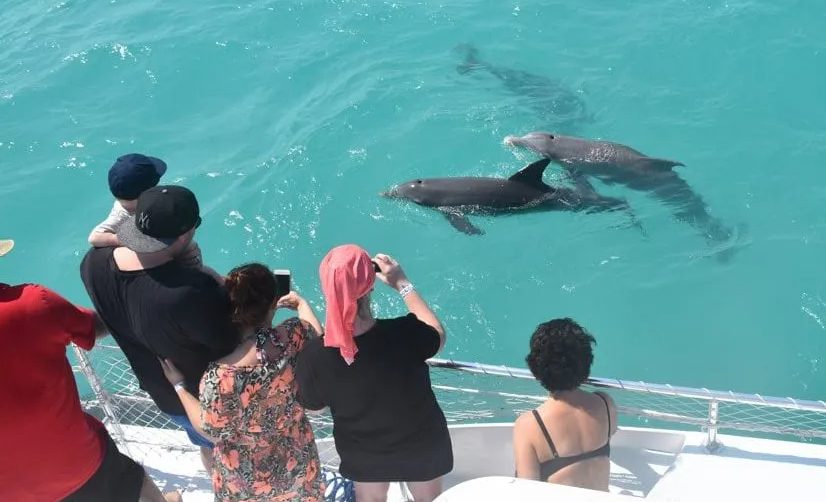
Early morning is the single best time of day to see dolphins in Key West, with late afternoon a close second. Dolphins feed most actively in the morning, working the shallow flats and channel edges of the backcountry while the water is still glassy. That calm surface matters more than most people realize: a dolphin sighting usually starts as a fin, a back, or a smooth rolling slick on the water, and all three are far easier to spot before the wind chops the surface into a thousand little waves that hide them.
Morning also wins on comfort. The air is cooler, the ride out is smoother, and if your trip includes snorkeling, ours does, the reef is at its clearest before afternoon wind stirs things up. If you only remember one rule from this page, make it this one: given a choice, take the earliest dolphin departure that fits your morning. Book your dolphin tour today.
Why late afternoon is the other sweet spot
Late afternoon is when the light turns golden, the day’s heat breaks, and dolphins feed again heading into evening. It’s also when you get the photos people frame: pods silhouetted against a low sun, with none of the harsh midday glare that washes out pictures. On our late departure, the dolphin watch and reef snorkel roll straight into the ride home at sunset, dolphins, snorkeling, and the world-famous Key West sunset in one 3-hour trip. For couples and photographers, that departure is very hard to beat.
Can you still see dolphins at midday?
Yes, you can absolutely still see dolphins at midday in Key West, because the dolphins never leave. What changes at midday is you, not them: the sun is at its strongest, glare on the water makes spotting harder, and the trade winds have usually built enough chop to hide fins between swells. On a calm midday, a good captain still finds pods. But if dolphins are the main reason you’re booking, morning and late afternoon stack the odds and the comfort in your favor.
When is the best time to see dolphins in Key West?
The best time to see dolphins in Key West is any month of the year, spring (March–May) and fall (October–November) are the sweet spots, with calm seas and comfortable weather, but resident bottlenose dolphins are in these waters in January and July alike. What actually changes month to month is not the dolphins. It’s the wind, the water temperature for your snorkel stop, and how busy the island is.
Here’s the honest month-by-month picture:
– November–February (winter): Dolphins are fully active and the island is in high season. The variable is cold fronts, a front can bring a windy, choppy day or two, followed by beautiful calm mornings. Water stays in the 70s, so the snorkel stop is refreshing; Sunset Watersports rents wetsuits if you’re cold-natured. Pick the morning after a front passes and you’ll often get the calmest water of the week.
– March–May (spring): The best all-around window. Warming water, lighter winds, long days, and dolphins feeding hard in the backcountry. If you can choose any season, choose this one.
– June–August (summer): The warmest water of the year and calm mornings are common, but be on an early boat. Afternoon thunderstorms build most days, and midday heat on deck is real. Morning departures dodge both.
– September–October (fall): Warm water, thinning crowds, and some of the most active dolphin watching of the year. October in particular is a local favorite, summer’s warmth without summer’s crowds.
Notice what’s missing from that list: a migration. There isn’t one. Book the calmest day in your trip window and you’ve done most of the work.
Where can you see dolphins in Key West?
The most reliable place to see dolphins in Key West is the Dolphin Playground, a shallow sandbank at the top of the Northwest Channel where local pods gather to rest, hunt and play and it’s the first stop on our dolphin trip. Around it stretches the backcountry: the maze of shallow flats, mangrove channels, and sandbars inside the Key West National Wildlife Refuge and the Florida Keys National Marine Sanctuary, where calm, food-rich water keeps resident dolphins close all year.
That geography is why a boat beats the beach here. You can occasionally spot dolphins from shore, from Mallory Square as boats move through the harbor, or off Fort Zachary Taylor on a calm morning, but shore sightings are luck. A captain who runs these waters daily is reading the day for you: diving birds working a bait school, a slick of unusually smooth water where a pod just surfaced, tide lines where fish stack up. The boat goes to the dolphins’ neighborhood instead of waiting for dolphins to wander past yours.
What type of dolphins will you see in Key West?
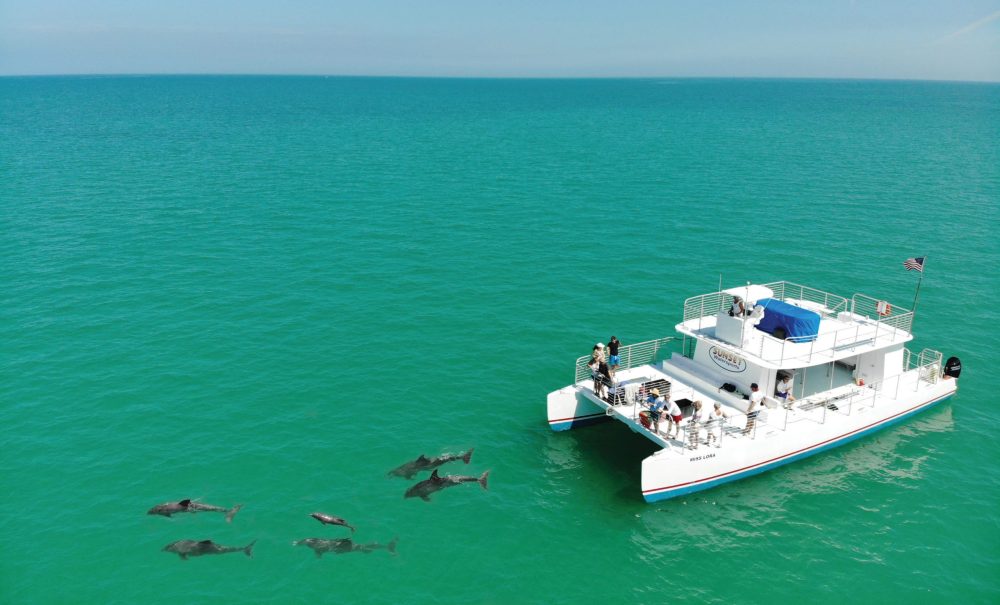
You will see wild Atlantic bottlenose dolphins (Tursiops truncatus) — the resident species of the Florida Keys, recognizable by their gray color, curved dorsal fin, and the short beak that gives them their name. Pods range from a few family members to groups of twenty or more, and because these are the same resident dolphins our crews see week after week, captains know their home ranges, their feeding flats, and their habits in a way no visiting boat could.
What dolphin behaviors should you watch for?
The behaviors you’re watching are the story of the pod’s day, and knowing what they mean turns a sighting into an experience. This is the part most dolphin pages skip entirely:
– Feeding: Dolphins working together to herd fish into the shallows, sometimes trapping them against a sandbar or mud bank. This is the most active behavior you’ll see on a morning trip, fast surfacing, splashing, and birds diving into the same school.
– Bow-riding: Dolphins surfing the pressure wave at the front of a moving boat, entirely by their own choice. If it happens, stay quiet and enjoy it, it’s the closest encounter Key West offers, and it only happens because the dolphins chose it.
– Mother-and-calf pairs: Calves surface tucked right against their mothers, in perfect sync. Backcountry shallows are nursery water, so pairs are common, and a good reason captains give family groups extra room.
– Tail-slapping and leaping: A tail slap can stun fish or signal the pod; a full leap is often play or communication. Either one is your cue to have the camera already up, not in your bag.
– Resting: Slow, synchronized surfacing in a tight group. The pod is half-asleep and cruising gently. Boats watch quietly and briefly, then move on, and so should your expectations. Not every encounter is a show, and that’s what “wild” means.
Daytime or sunset departure, which dolphin trip should you pick?
Both of our departures run the same 3-hour trip, Dolphin Playground first, then a reef snorkel, then the cruise home, so the real question is which version of the day you want. Here’s the honest breakdown:
– Pick the daytime departure if: dolphins and snorkeling clarity are your top priorities, you’re traveling with young kids who do better earlier, or you want the rest of your afternoon free in Key West. Calmest water, clearest reef, easiest spotting.
– Pick the sunset departure if: you want the full triple, dolphins, snorkeling, and a Key West sunset from the water in a single trip, or you’re booking for a date night, a celebration, or photos. Dolphins stay active into the evening, the light is unbeatable, and unlimited draft beer and soft drinks on the ride home (after snorkeling) turn the return into part of the party.
Either way, you check in at the Sunset Watersports booth at 201 William St in the Historic Seaport, and snorkeling equipment is included. Book the trip here: Key West Dolphin Watch & Snorkeling. If snorkeling is your main event and dolphins are the bonus, compare it with our dedicated reef trips: Key West Snorkeling Tours.

What is the best weather for dolphin watching?
The best weather for dolphin watching is a light-wind day, under about 15 knots, with calm seas, whatever the sky is doing. Wind, not sunshine, is what makes or breaks a dolphin trip: calm water lets you spot fins and slicks at a distance, and it makes the ride comfortable for everyone on board. Mornings beat afternoons on this score most days, because Key West’s trade winds typically build as the day heats up.
Do dolphins come out when it’s cloudy?
Yes, dolphins are just as active on cloudy days as on sunny ones, because their behavior runs on feeding and tides, not on sunshine. In fact, an overcast morning is often a quietly great dolphin day: less glare on the water makes fins easier to see, the deck is cooler, and the seas are frequently calmer. Don’t cancel a dolphin trip over clouds. Wind is the forecast number to watch, not the cloud icon.
What if the weather turns rough?
If conditions aren’t safe or the trip can’t run well, the trip doesn’t go, you’ll be rescheduled or refunded under the booking terms. In winter especially, the smart move is flexibility: if your Key West stay spans a few days, book your dolphin trip early in the stay. That leaves you a calm-day backup if a cold front picks your first date to blow through.
How close will you get, and can you swim with dolphins in Key West?
You cannot swim with, touch, or feed wild dolphins in Key West, it’s illegal under the federal Marine Mammal Protection Act, and boats must stay at least 50 yards from wild dolphins. Your captain will slow, stop, or idle in neutral when a pod is near, and then the choice is the dolphins’. That’s not a limitation on the experience; it’s the reason the experience is good. Key West’s dolphins are calm around boats precisely because boats here don’t chase them, so pods regularly approach on their own, bow-ride, and swim alongside, sometimes just feet away. You watch wild dolphins behaving like wild dolphins, not performing, and the snorkeling on our trip happens separately, at the reef, never with the dolphins.
Are Key West dolphin tours good for kids?
Yes, Key West dolphin tours are one of the best family activities on the island, and morning departures are the easiest version for young kids: calmer water, cooler air, and a gentler ride. The trip is 3 hours, which respects nap schedules and attention spans, kids are mesmerized by the Dolphin Playground stop, and the snorkel that follows comes with gear and flotation provided, so first-timers are looked after. Bring a snack, put them in a sunshirt, and tell them the truth that makes it magic: we’re visiting the dolphins at their house, and they decide if they come out to play.
What should you bring on a dolphin tour?
Bring reef-safe sunscreen, polarized sunglasses, a hat, a towel, and your swimsuit worn under your clothes, plus a government-issued photo ID for check-in (and for the bar, if you’re 21+). Polarized sunglasses are the insider item on this list: they cut the glare that hides fins, and they’re the difference between seeing the pod when the captain calls it and seeing it ten seconds late. Add a light layer in winter, the breeze on an early boat is cooler than the dock, a waterproof phone case for photos, and motion-sickness medicine taken before boarding if you know you’re prone. Snorkeling gear is included on our trip, so leave yours at the hotel.
What happens if you don’t see dolphins?
Honestly? It’s possible, these are wild animals, and no operator can truthfully guarantee a sighting, whatever their website says. What a good operator can guarantee is effort and local knowledge: our captains run to the Dolphin Playground and the backcountry feeding grounds where resident pods spend their days, read the birds and the water, and keep searching across the trip instead of checking a box and turning for the reef. Sightings happen on the great majority of trips here because the dolphins live here, but if your day is the exception, you still got a reef snorkel in the Sanctuary and a boat ride through some of the prettiest water in Florida. Book early in your stay, pick the calm morning, and the odds are firmly on your side.
How to pick the best day if your dates are flexible
If you have three or four days in Key West, you can out-plan almost everyone else on the boat with a 60-second forecast check:
1. Look at wind, not rain. Choose the morning with the lightest forecast wind in your window. Under 15 knots is good; under 10 is a gift.
2. Avoid the day a cold front arrives (winter). The day after it passes is often glass-calm. Fronts are easy to spot on any forecast, a sharp wind shift and a temperature drop.
3. Take the earliest departure on that day. Calm compounds: light-wind days are calmest before the sun heats the island and the breeze fills in.
4. Book it as soon as you’ve picked it. The good-weather departures are the ones everyone else figures out too, and they sell first.
Do those four things and you’ve done everything a local would do, the rest is up to the dolphins, and they show up.
Frequently Asked Questions
What is the best time of day to see dolphins in Key West?
Early morning and late afternoon are the best times of day to see dolphins in Key West. Morning brings the calmest water and peak feeding activity before the afternoon trade winds build, and late afternoon brings softer light, settling seas, and active pods again, plus, on the sunset departure, the ride home under a Key West sunset.
When is the best time of year to see dolphins in Key West?
Every month of the year is a good time to see dolphins in Key West, because the bottlenose dolphins here are year-round residents that never migrate. Spring (March–May) and fall (October–November) are the sweet spots for calm seas and comfortable weather, while winter trips are best booked on the calm mornings between cold fronts and summer trips are best booked early in the day.
Are dolphins in Key West year-round?
Yes, dolphins are in Key West year-round. The Atlantic bottlenose dolphins around Key West are resident pods that live in the backcountry flats, channels, and reef edges in every season, feeding, socializing, and raising calves here instead of migrating. That is why Key West dolphin tours run in every month of the year.
Can you swim with dolphins in Key West?
No, you cannot swim with wild dolphins in Key West. Federal law, the Marine Mammal Protection Act, prohibits swimming with, touching, feeding, or approaching wild dolphins, and boats must keep at least 50 yards away. Dolphins frequently choose to approach boats on their own, which is how the close encounters on a dolphin tour happen.
How close will the boat get to the dolphins?
The boat will stay at least 50 yards from wild dolphins, as federal law requires, and your captain will slow, stop, or idle in neutral near a pod. Dolphins are curious and comfortable around respectful boats in Key West, so they often close the distance themselves, bow-riding and swimming alongside, sometimes just feet from the boat.
What should I bring on a dolphin tour in Key West?
Bring reef-safe sunscreen, polarized sunglasses, a hat, a towel, and a swimsuit worn under your clothes, plus a government-issued photo ID for check-in. Add a light layer in winter, a waterproof phone case for photos, and motion-sickness medicine taken before boarding if you are prone to seasickness. Snorkeling equipment is included on the Sunset Watersports dolphin tour.
Are Key West dolphin tours good for kids?
Yes, Key West dolphin tours are great for kids, and morning departures are the best choice for young children because the water is calmer, the air is cooler, and the ride is gentler. The Sunset Watersports dolphin tour runs 3 hours, visits the Dolphin Playground, and includes snorkeling gear and flotation for the reef stop that follows.
How long is the Sunset Watersports dolphin tour?
The Sunset Watersports dolphin tour is 3 hours. It combines a visit to the Dolphin Playground to watch Key West’s resident dolphins, a reef snorkeling stop with equipment included in the Florida Keys National Marine Sanctuary, and on the late departure, a Key West sunset cruise on the ride back to the Historic Seaport.
Ready to see them for yourself? Book direct with Sunset Watersports and pick your departure, early for the calmest water and clearest reef, or late for dolphins, snorkeling, and sunset in one trip. Booking direct means easier changes and refunds if your plans shift, and the crew at the dock will know your name when you check in at 201 William St. Book your Key West Dolphin Watch & Snorkeling trip today
Check out this snorkeling adventure that led to swimming with Key West sea turtles.

- Posted in:
